Science Journalism Prize

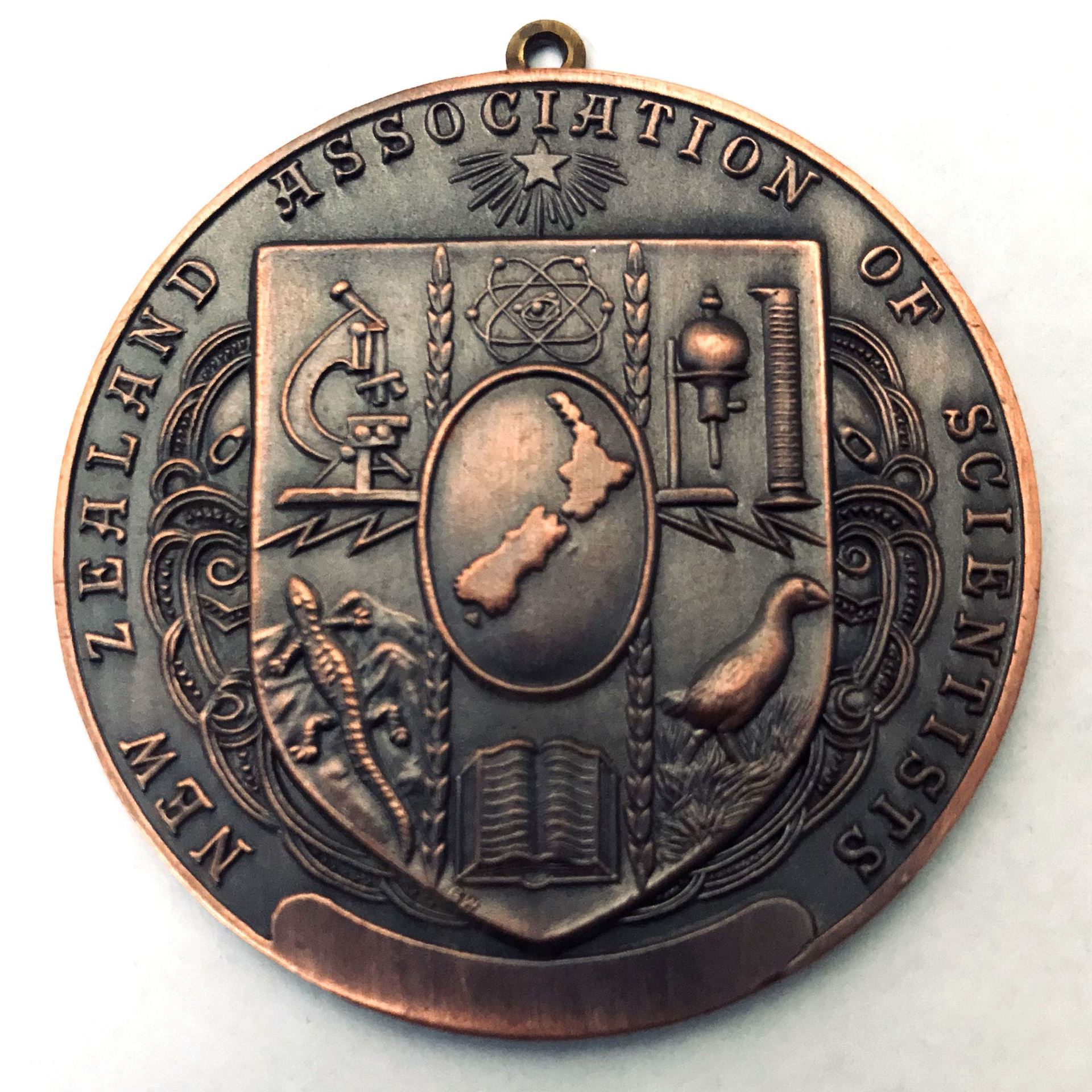
The Association of Crown Research Institutes and Industrial Research Limited have sponsored the Certificate for Science Journalism. The Certificate and a prize of $1500 were awarded each year between 1997 and 2001 to a practising journalist to encourage public appreciation of scientific objectives, methods and achievements through recognition of outstanding science journalism. 

Association of Crown Research Institutes Science Journalism Prize 2001

The Science Journalism Prize was awarded to Radio NZ personality Kim Hill. Her interviews with New Zealand's Nobel Prize Winner Alan McDiarmid, Nobel Laureate Maurice Wilkins, and her fascinating interview with Professor Brian Wynne covering "science in society", have been characterised as worthy of placement in historical archives. The person, the issues and the science were drawn out through the interviews, and the contributions displayed radio feature presentation at its best. Merit award winners were Lisa Glass of TVNZ and Anne Beston of the New Zealand Herald. TVNZ's Assignment programme contributed excellent features involving interviews at home and abroad that sought to portray a field of health science in everyday terms. It succeeded admirably. Lisa Glass brought flair, imagination and almost "new life" to science reporting on news programmes when given the opportunity. Anne Beston of the New Zealand Herald deserves commendation for her high quality, consistent presentation of science that matched the needs of a daily newspaper.

Association of Crown Research Institutes Science Journalism Prize 2000

Veronika Meduna of Radio New Zealand won the 2000 Association of Crown Research Institutes Journalism Award, including a $1500 prize and a certificate, for a range of material from both radio and print. The judges commented that her radio work 'was notable for its balance, research and her ability to reflect varying views of scientific issues in a short item, news or feature. "Her written entries were frequently snappy, to the point and easy reading with good explanation for lay readers and students." Alan Samson of the Dominion won the first merit prize of $350 and a certificate for a collection of items that ranged over wide areas of science. The judges said his writing reflected a keen instinct for angles of appeal to the readership of his newspaper. "His work demonstrated an ability to move quality balanced copy at an admirable pace and also a keen talent for investigative work. " Mauricio Olmedo-Perez of Television New Zealand won the second merit prize of $350 and a certificate. "The distinguishing feature of his work was the impressively tight editing under time constraints of television news items. " The judges also commended the work of Allan Coukell of Radio New Zealand, Jackie Marr of Television New Zealand, and Donna Chisholm of the Sunday Star-Times.

Industrial Research Limited Science Journalism Prize 1999

The 1999 Science Journalism prize was won by Vicki Hyde, of Christchurch. Vicki is perhaps best known for editing New Zealand Science Monthly, which first appeared in 1990 and has been providing an interesting background and insight into the scientific community for the past nine years. She is a recipient of a RSNZ Science and Technology Medal of New Zealand, Chair-entity for the New Zealand Skeptics and the mother of three children. Vicki was awarded the Journalism prize for a series of articles published over the past year in Grace magazine. The articles covered topical issues such as cell phone towers and their feared but unclear and unestablished effects, economic matters such as the potential of seaweed as a source of new, biologically friendly chemicals, and a thought provoking piece on the rights of the great apes. The first of the three Merit awards was won by Catherine Harris of Radio NZ, Wellington, for a collection of items on New Zealand scientific developments broadcast on Morning Report and Checkpoint. Her work includes a programme on climate change, and an in-depth investigation into the scientific and legal issues surrounding genetically modified food crops. Catherine was assigned the science round at Radio New Zealand about four months ago. The second Merit award went to Allan Coukell, also of Radio NZ, for two Eureka! programmes. These were The Fifth State, about the successful production of Bose-Einstein condensate at Otago University, and The Dating Game, about techniques for dating (that is, determining the age of) artefacts, rocks, events, and the entire universe. The third Merit award was won by Keith Perry, science reporter of the New Zealand Herald, for a series of articles on New Zealand scientific work ranging from the application of computer images to determine how the brain functions, the success of the Kiwistar lens developed by Industrial Research Limited, and the use of satellite imagery to improve the performance of the New Zealand fishing industry.

Industrial Research Limited Science Journalism Prize 1998

The 1998 Industrial Research Limited Science Journalism Award, is won by Alan Samson of the Dominion. Alan published an impressive portfolio of eighteen stories on topics ranging from spiders to superconductivity, from possums to genetically modified food, and from the Antarctic to the next Taupo eruption. (Incidentally, Antarctica might be a good place to be during the next Taupo eruption.) Some of the stories were clearly about new issues that Alan had "broken". He showed an ability to write both strong news stories and well-crafted features and profiles. His work is engaging, easy to read and conveys both the historic and scientific context to the reader. Above all, his writing displays an enthusiasm for science and a commitment to making it interesting to the public. In the words of one of the judges, Alan is the quiet giant of New Zealand science journalism. The first Merit Award is won by Keith Perry, the Science Reporter at the New Zealand Herald. Keith published a series of eight articles on range of medical research topics. The stories were intelligent and interesting, and they conveyed a sense of enthusiasm for the topics. The articles were enhanced by wonderful pictures, and some were "breaking" stories that opened new areas of public interest. The second Merit Award goes to Nicola Legat of North and South Magazine, for her article The Killing Seas. In this article, Nicola discussed the damage to marine ecosystems caused by fishing vessels, and the scientific, political and economic issues surrounding the management of fisheries. This was an original, well-researched piece of work that presented and explored a new area of public concern. It demonstrated a talent for investigative journalism, and for presenting complex issues in a readable and accessible form.

Industrial Research Limited Science Journalism Award 1997

The 1997 Industrial Research Limited Science Journalism Award was won by Gilbert Wong of the New Zealand Herald, Auckland for a series of articles, published in the Herald. The topics ranged from an article about Richard Dawkins during his visit last year, through chaos to the millennium glitch. The judges described the work as showing a clear, in-depth explanation of scientific topics, and written with flair. The Herald is to be congratulated in encouraging science journalism of this quality. The first Merit Award was won by to Veronika Meduna of the Christchurch Press. Veronika published a series of articles on the work of local scientists in different areas, as various as eels, earthquakes and extra-terrestrial visitors. This is the third time that Veronika has gained a Merit Award in the competition and, as in previous years, she has demonstrated that she is an accomplished specialist science writer who tackles complex topics with skill, knowledge and confidence. The second Merit Award went to Diana Burns and Lisa McMillan of Radio New Zealand for the Science Update feature that they broadcast each week on National Radio's evening programme Into the Night. The items used the advantages of radio to present conversations with real people (that is, scientists). The features demonstrate a naturalness and ease that disguises thorough preparation. By showing a good understanding of the material they hold the attention of a lay audience to what might otherwise be obscure topics.